01
Stable build
Deliver a stable, reliable build of the existing platform.

Case study
How Huboxt stabilized an inherited Java/Vue real-time auction platform, made its English auction work reliably with WebSocket-based live bidding and notifications, and reduced hosting costs by right-sizing the infrastructure on Azure.
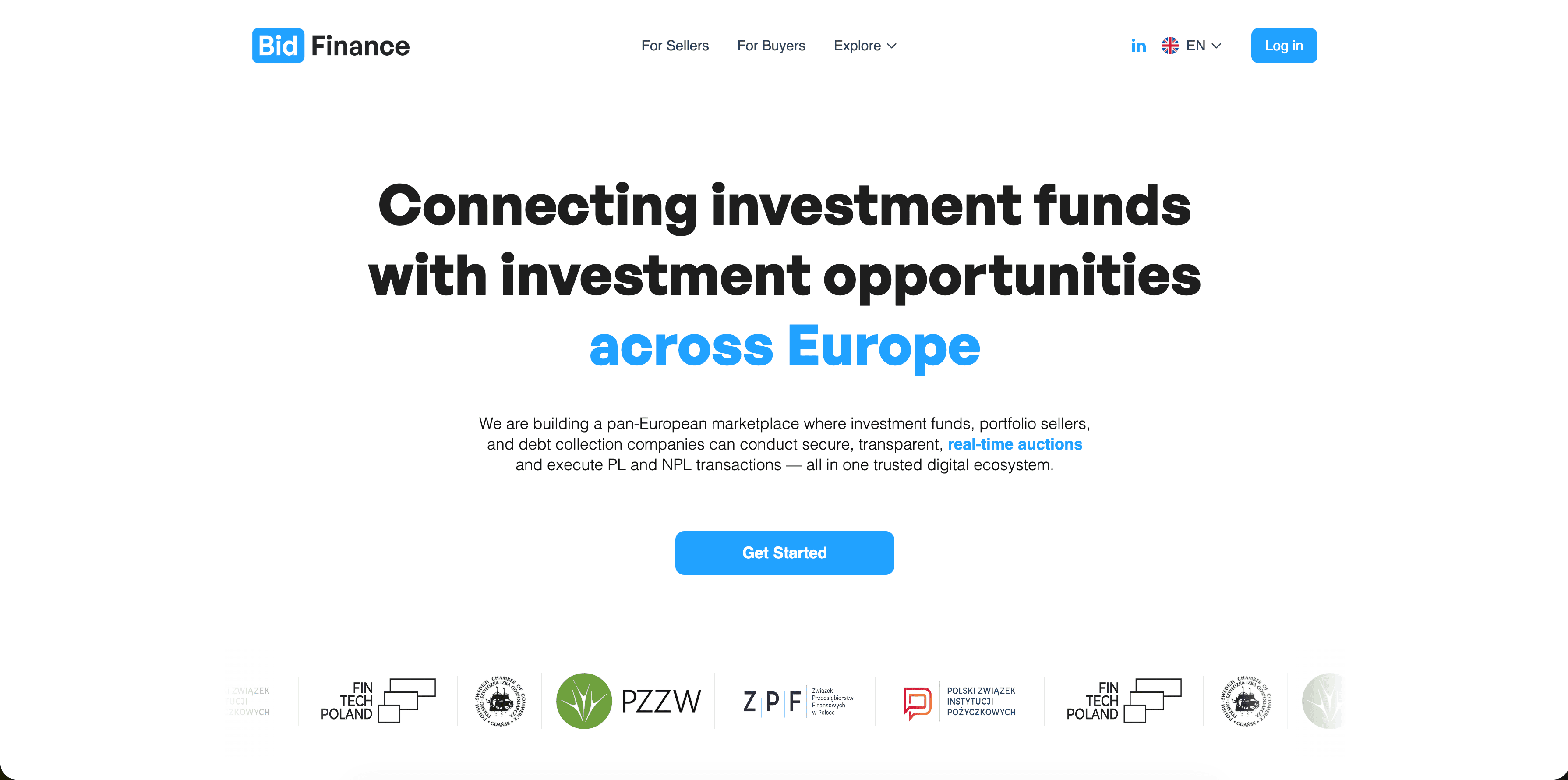
BidFinance had a platform, but barely a working one. The product — a real-time auction marketplace for debt portfolios — was built on a Java Spring backend and a Vue.js frontend, hosted on AWS, and it wasn't stable enough to rely on. The core feature, the auction itself, didn't work the way it needed to.
The hosting bill made things worse. The platform ran on Kubernetes with multiple scaled pods — an architecture sized for heavy, constant traffic — backed by a database provisioned far larger than the workload required. The actual usage pattern was the opposite: a small number of participants using the platform roughly once a week. The result was infrastructure provisioned for load that never arrived, costing around €2,500 a month for a product that was neither stable nor heavily used.
The job was twofold: make the platform genuinely work — especially the real-time auction — and bring the cost in line with reality, without losing the parts that were worth keeping.
01
Deliver a stable, reliable build of the existing platform.
02
Make the English auction work properly, with real-time bidding.
03
Add real-time messaging and notifications for auction participants.
04
Right-size and re-host the infrastructure to cut the monthly cost.
05
Establish proper configuration and a foundation the platform could grow on.
We stabilized the inherited codebase first, made the English auction work in real time with WebSockets, and right-sized the infrastructure on Kubernetes/Azure to match how the platform was actually used.
01
Worked through the inherited Java Spring / Vue.js codebase to get it to a stable, reliable state before extending it — reliability came before features.
02
Made the core auction flow work correctly with real-time bids — bidding opens from the seller's reserve price and participants compete with progressively higher bids, live.
03
Built WebSocket-based messaging into the platform and wired up email notifications to all participants, so everyone stays informed as auctions progress.
04
Migrated to Kubernetes on Azure, sizing pods and the database to actual demand, with proper configuration across two environments — cutting cost without compromising auction reliability.
Platform rescue on the existing Java Spring + Vue.js stack — stabilization, real-time auction delivery, messaging, and cloud cost optimization.
Stabilized the platform
Turned a barely-working inherited build into a stable, reliable one on the existing Java Spring + Vue.js stack.
Real-time English auction
A correctly functioning auction with real-time competitive bidding — the platform's core transaction, finally dependable.
Messaging & notifications
WebSocket-based messaging plus email notifications to all auction participants, keeping buyers and sellers in sync as auctions run.
Kubernetes/Azure migration
Moved from the over-provisioned AWS cluster to Kubernetes on Azure, sizing both the pods and the database to real usage, with proper configuration across two environments.
Ongoing support
After the initial three-month stabilization, continued supporting and developing the platform for a further nine months.
01
A stable, working platform in three months — including a properly functioning real-time English auction, the feature the product depends on.
02
WebSocket messaging and participant emails keep everyone in an auction informed as it happens.
03
Hosting cost cut from about €2,500/month to around €370/month — now covering two environments rather than one.
04
Three months to stabilize and deliver, then nine months of continued support and development.
05
Following the work, BidFinance secured a further investment round and continues to grow across European markets.
“Two judgment calls drove the outcome. First, stabilize before extending: a real-time auction is only as good as the build it runs on, so reliability came before features. Second, match the infrastructure to reality: the inherited cluster and database were provisioned for traffic the platform didn't have, so right-sizing the Kubernetes pods and the database on Azure cut the monthly bill by around 80% — covering two environments for a fraction of the previous cost of one. The result was a platform that finally worked the way it was meant to, at a cost that made sense, with a foundation solid enough to support a new investment round and continued growth.”

Read the client's review on Clutch
Independent feedback from the team behind this project — verified on Clutch.
Let's talk
Contact us if you have any projects in mind
Tell us about your idea, expected budget, and timeline. We usually reply within one business day.