01
Purpose-fit rebuild
Rebuild Pump Portal from scratch on a scalable, maintainable, purpose-fit stack.

Case study
How Huboxt rebuilt SeeWater's Pump Portal from the ground up — moving off a templated, off-the-shelf platform with little room to customize, onto a Python/FastAPI, Next.js and MQTT/EMQX stack on AWS — and added Stripe subscription billing, automated reporting and an advanced alerting system.
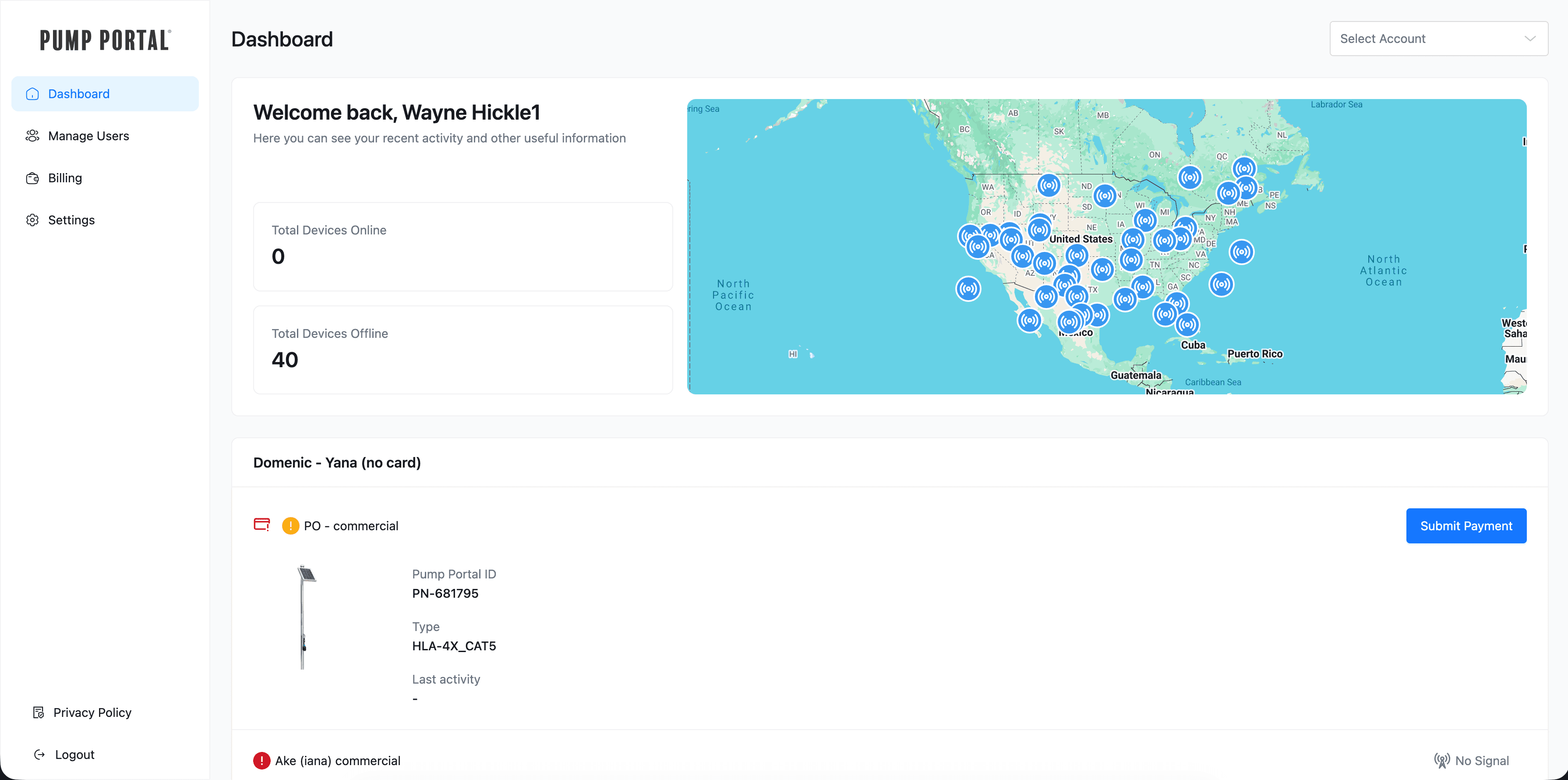
Pump Portal® lets organizations monitor and control their pump stations remotely — pulling real-time data from control panels in the field over cellular, visualizing water levels and faults, and sending alerts when something needs attention. It's a real-time IoT product with real operational stakes.
The first version had been built on a templated, off-the-shelf platform — the kind that gets a product running quickly but offers little room to customize. That's a reasonable starting point, but it's the wrong foundation for a real-time IoT platform that ingests telemetry from devices in the field, controls equipment remotely, and needs to bill customers reliably. The platform needed a proper, purpose-built foundation it could shape to its own needs and scale on — and the commercial capabilities, like subscription billing and automated reporting, to run as a real SaaS.
So this was a full v2 rebuild: re-engineer the platform from scratch on a stack fit for real-time device data, and add the billing, reporting and alerting a production monitoring service depends on.
01
Rebuild Pump Portal from scratch on a scalable, maintainable, purpose-fit stack.
02
Handle real-time device telemetry and remote control reliably.
03
Turn the product into a true subscription SaaS, with flexible billing.
04
Add automated reporting and an advanced, multi-channel alerting system.
We re-engineered Pump Portal end to end on a purpose-fit stack, built the real-time layer on MQTT/EMQX, integrated Stripe for subscription billing, and added automated reporting and advanced alerting on top.
01
We re-engineered the platform end to end on Python/FastAPI for the backend and Next.js for the web application, backed by PostgreSQL and hosted on AWS — replacing the templated, off-the-shelf origins with a foundation designed and fully customizable for a real-time IoT SaaS.
02
Pump Portal's core is live data from field devices. We built the real-time layer on MQTT with an EMQX broker, the right model for ingesting telemetry from pump panels over cellular and pushing control commands back out reliably.
03
We integrated Stripe for subscription billing, with multiple payment methods (cards and invoices), and a grace period so customers aren't cut off the moment a payment is late — turning the platform into a SaaS that can actually bill and retain customers.
04
On top of monitoring and control, we built automated reporting — with Power BI dashboards layered on top — and an advanced alerting system, so customers get the information and the warnings they need without manual effort.
A full v2 rebuild — real-time IoT backbone, subscription billing, reporting, alerting and a Flutter mobile app on a clean, scalable foundation.
From-scratch v2 platform
A full rebuild on Python/FastAPI, Next.js, PostgreSQL and AWS — a clean, scalable, fully customizable foundation in place of the original templated software.
Real-time IoT backbone
MQTT/EMQX-based messaging for live telemetry from pump control panels and remote control of equipment in the field.
Subscription billing with Stripe
Subscriptions with multiple payment methods — cards and invoices — and a grace period to handle late payments gracefully rather than abruptly suspending service.
Automated reporting with Power BI
Reporting generated automatically, with Power BI dashboards layered on top, so customers and staff get the metrics and records they need without manual work.
Advanced alerting system
Configurable, multi-channel alerting that surfaces faults and conditions promptly — the core value of a remote monitoring product.
Flutter mobile app
A mobile application for customers, built from scratch in Flutter, putting monitoring, alerts and control in their pocket alongside the web app.
01
A purpose-built platform on Python/FastAPI, Next.js and AWS, replacing templated software that couldn't be customized for real-time IoT.
02
MQTT/EMQX handles live device telemetry and remote commands across the pump fleet.
03
Stripe billing with cards, invoices and a grace period turns the product into a recurring-revenue business.
04
Automated reporting with Power BI dashboards and advanced multi-channel alerting reduce hands-on work and surface issues quickly.
05
A Flutter mobile app gives customers monitoring, alerts and control on the go alongside the web application.
06
A clean architecture the platform can extend as SeeWater's monitoring fleet and feature set expand.
“Templated, off-the-shelf software is a fine way to validate an idea, but a real-time IoT platform that controls equipment and bills customers needs a foundation built for the job — one you can shape to your own needs. The v2 rebuild gave Pump Portal exactly that: FastAPI and Next.js for a clean, scalable application, MQTT/EMQX for the real-time device layer at its core, and Stripe-backed subscriptions with flexible billing to run it as a real SaaS. With automated reporting and advanced alerting on top, the platform does more with less manual effort — and has the architecture to keep growing.”
Let's talk
Contact us if you have any projects in mind
Tell us about your idea, expected budget, and timeline. We usually reply within one business day.